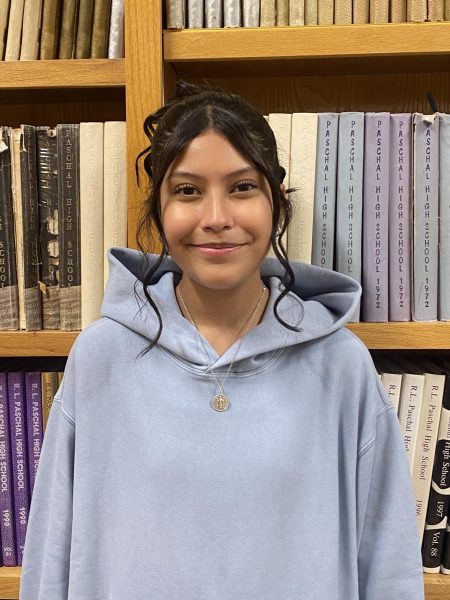
The debate over euthanasia has been prominent under the discussion of ethical and legal standards. Noelia Castillo Ramos was born on November 14, 2000 in Barcelona, Spain and is now acknowledged to be one of the youngest people to be allowed euthanasia in Spain at only twenty five years old.
Upon asking for nearly two years, Castillo has been enduring both physical and mental agony since she was a teenager. As Noelia Castillo’s circumstances have become internationally acclaimed, it has ignited conversations in the United States over human rights.
For numerous years, Noelia Castillo faced adversity regarding psychological health. Castillo was diagnosed with Borderline Personality Disorder, Obsessive Compulsive Disorder, and Chronic Depressive Symptoms.
She was then severely affected becoming a victim of sexual assault three different times by a former partner, two males at a club, and another occurrence by three males at a club which further affected her mental state.
In 2022, Castillo then attempted to commit suicide which resulted in her being paraplegic from the waist down. She then had to suffer from Chronic Pain Syndrome beyond emotional distress.
At only twenty one years old Noelia Castillo needed to confront the fact that her life was now altered, requiring assistance and medical attention consistently. On the daily television magazines show “Y Ahora Sonsoles,” Noelia Castillo communicated “I think and all the pain I’ve suffered over all these years, I simply want to leave in peace and stop suffering.”
Although she realizes the infliction of suffering she may put those around her through, she cannot bear the pain she has been living in.
Given these dire straits, Castillo asked for a release from suffering and sought for euthanasia in 2024.
It had only been three years since Spain had approved of euthanasia. However, the process and requirements are extremely rigid, needing to be a resident, of legal age, two requests, verification from two doctors, battling against a condition or disease, and much more.
Noelia Castillo’s father, Geronimo Castillo was not in agreement with Noelia’s decision to get euthanized which led to litigation between the two.
The European Court of Human Rights and Spanish courts upheld Noelia Castillo’s decision stating that she has the ability to determine her course of action.
In the United States, the euthanasia laws are stringent and can differ depending on the state. Oftentimes, euthanasia and physical assisted death could get mixed up with the other. Euthanasia is performed by a doctor that personally medicates a patient to mercifully kill a patient which is not legal in the United States.
Physical assisted death involves a doctor prescribing medication, however, the patient is who administers it.
Only thirteen states in the United States have legalized physician assisted death. These states include California, Colorado, Delaware, Hawaii, Illinois, Maine, Montana, New Jersey, New Mexico, New York, Oregon, Vermont, and Washington. Physician assisted death is also known as the “Death with Dignity Acts.”
Similar to Spain regarding euthanasia, there are also regulations and requirements needed in order to perform the treatment planning such as life limiting conditions, expecting to die in 6 or less months, processing time, medical screenings, and many more.
Although physical assisted death and euthanasia are both illegal in Texas, The Texas Advance Directives Act states how individuals can make their own conclusions concerning themselves or their family members.
This involves “Directive to Physicians and Family Surrogates” where you can decide what medical treatments you prefer if you become terminally ill, incommunicative, and permanently hurt. Authorizing Texans to still have the ability to decide their moments of passing.
Different communities around the world have been profoundly moved by Noelia Castillo Ramo’s story, questioning whether the government and the healthcare system should have a say in others autonomy. As of 2026, only ten to twelve countries have legalized euthanasia out of one hundred ninety five countries.
Laws continue to change, values differ, opinions become more outspoken, the discourse about euthanasia is becoming more complex and it is just commencing.