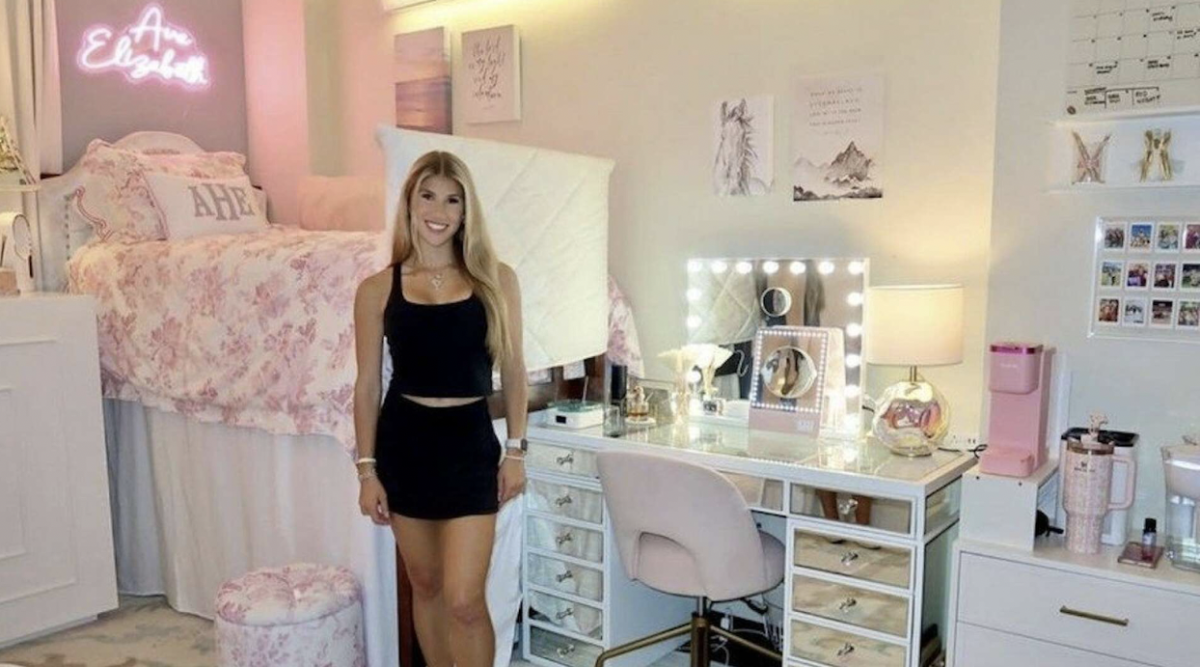
In recent years, college dorm rooms have evolved from simple living spaces into curated, highly coordinated environments that often resemble showrooms more than student housing. What was once considered a rite of passage—moving into a modest, functional room with basic necessities—has shifted into a trend marked by heightened expectations, aesthetic precision, and significant financial investment.
Many parents, especially mothers, now view dorm design as an extension of their daughters’ identities, resulting in décor budgets that can range from the expected few hundred dollars to well over $1,500 or even $2,000. This growing phenomenon raises important questions about spending culture, pressure among students, and what it means when practicality becomes overshadowed by presentation.
During my research, I interviewed two college students whose experiences reflect this trend. Ellie Bryant, a freshman at the University of Oklahoma, described the surprising contrast between her own setup and her roommate’s. “My roommate’s mom spent over a thousand dollars on just her side of the room,” she explained. The items included custom bedding, matching storage units, coordinated art pieces, and even personalized lighting. Ellie noted that while she appreciated the effort put into the space, it also created an unspoken pressure to keep everything perfect. The room no longer felt like a casual place to relax but instead a space that needed to be maintained at an almost showroom standard.
Similarly, I spoke with Gabby Price, whose experience echoed Ellie’s. Gabby’s mother invested more than a thousand dollars in her dorm décor, aiming to ensure her daughter felt “comfortable and confident” during her first year away from home. Gabby admitted that while she enjoyed the finished result, she was initially uncomfortable with the price tag. “It felt excessive,” she said, especially when many of her peers furnished their rooms with far more modest budgets. This discrepancy, according to Gabby, created a noticeable divide among students—some rooms appeared curated enough to post on social media, while others remained fully practical and undecorated.
In the end, the surge in expensive, highly designed dorm rooms has much more to do with the moms than the students themselves. Most girls would be perfectly content with a simple, functional space, but many mothers turn move-in day into a full-scale decorating project fueled by trends and social pressure. What should be a practical room often becomes a high-budget display of matching décor, coordinated colors, and curated details. As this trend grows, it’s clear that dorm rooms are starting to reflect a parent’s vision of perfection far more than a student’s actual needs or preferences.